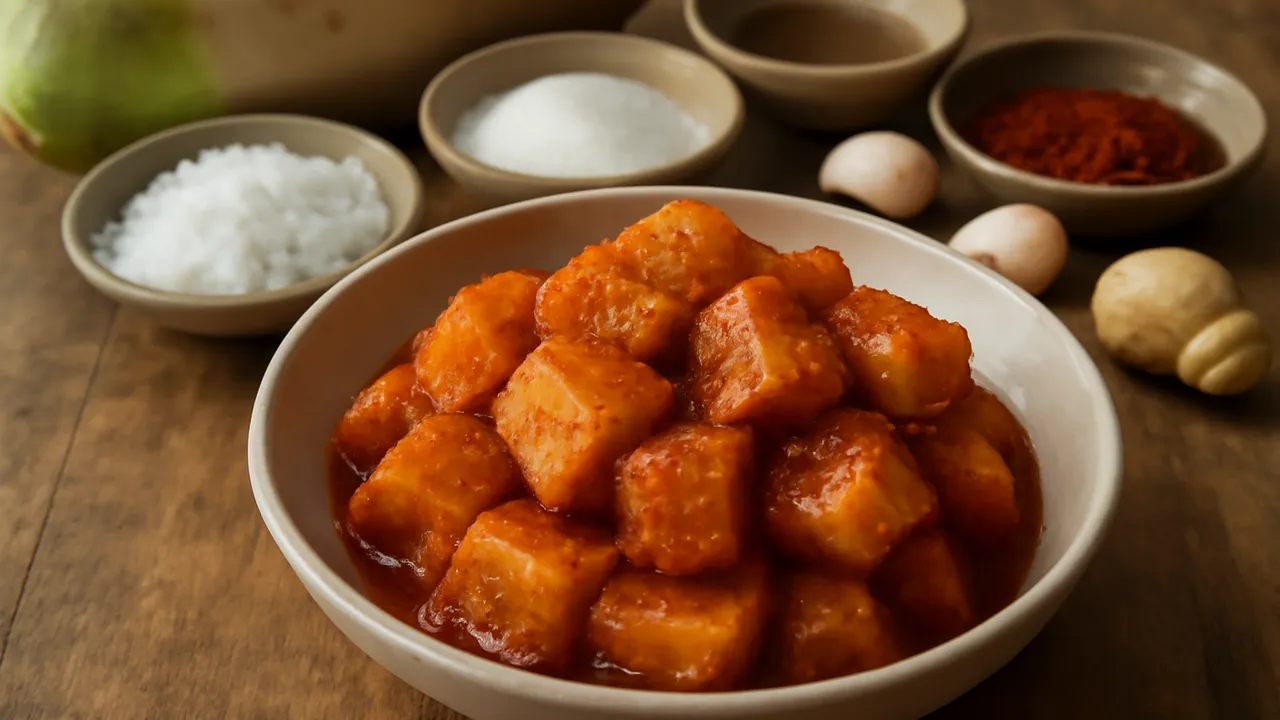
Kkakdugi
KoreanEasy1 hr 20 minServes 12
Cubed Korean radish salted until it squeaks, then coated in gochugaru, fish sauce and salted shrimp and left to sour into the crunchiest kimchi of them all.
Per
serving
serving
48kcal
2gprotein
10gcarbs
Ingredients
- 2 kg Korean radish (mu), about 2 large
- 2 tbsp coarse Korean sea salt
- 1 tbsp caster sugar
- 100 g gochugaru (Korean red pepper flakes)
- 3 tbsp anchovy fish sauce (myeolchi aekjeot)
- 2 tbsp saeujeot (salted fermented shrimp), finely chopped
- 3 tbsp garlic, minced (about 10 cloves)
- 1 tsp fresh ginger, finely grated
- 4 spring onions, cut into 3 cm lengths
- 2 tbsp cooked short-grain rice, mashed to a paste with 2 tbsp water
Before you cook
- Scrub the radishes under cold water and scrape off any rough patches of skin with the back of a knife.
- Trim the tops and root ends, then cut each radish into 2 cm thick discs.
- Cut the discs into 2 cm batons, then across into 2 cm cubes.
- Mash the cooked rice with the water to a loose paste.
- Put on kitchen gloves and have a large non-reactive bowl and a 2 litre airtight jar ready.
Steps
- Tip the radish cubes into the large bowl, scatter over the salt and sugar, and toss with your hands until every cube is coated.
- Leave the radish at room temperature for 1 hour, turning it over with your hands every 20 minutes.
- Drain the radish in a colander set over a bowl and keep 80 ml of the salty radish liquid.
- Return the drained cubes to the bowl without rinsing them.
- Add the gochugaru and toss until every cube glows deep red.
- Stir in the fish sauce, chopped salted shrimp, garlic, ginger, rice paste and the reserved radish liquid.
- Mix hard for a full minute so the seasoning clings as a thick paste rather than a loose sauce.
- Fold through the spring onions with a light hand so they do not bruise.
- Taste a cube and add another teaspoon of fish sauce if it needs more salt.
- Pack the kkakdugi into the jar, pressing down firmly after each addition to drive out air.
- Leave 3 cm of headspace at the top, seal the jar, and stand it on a tray at room temperature for 2 days.
- Move the jar to the fridge and start eating after 3 days, though the flavour peaks at 2 weeks.
Cook this recipe with Sue Chef
Sue reads every step aloud, sets the timers, and answers questions while your hands are covered in flour. Leave your email and we’ll tell you the moment it opens.